
Episode 10 | 28 Minutes | Dec 9, 2025
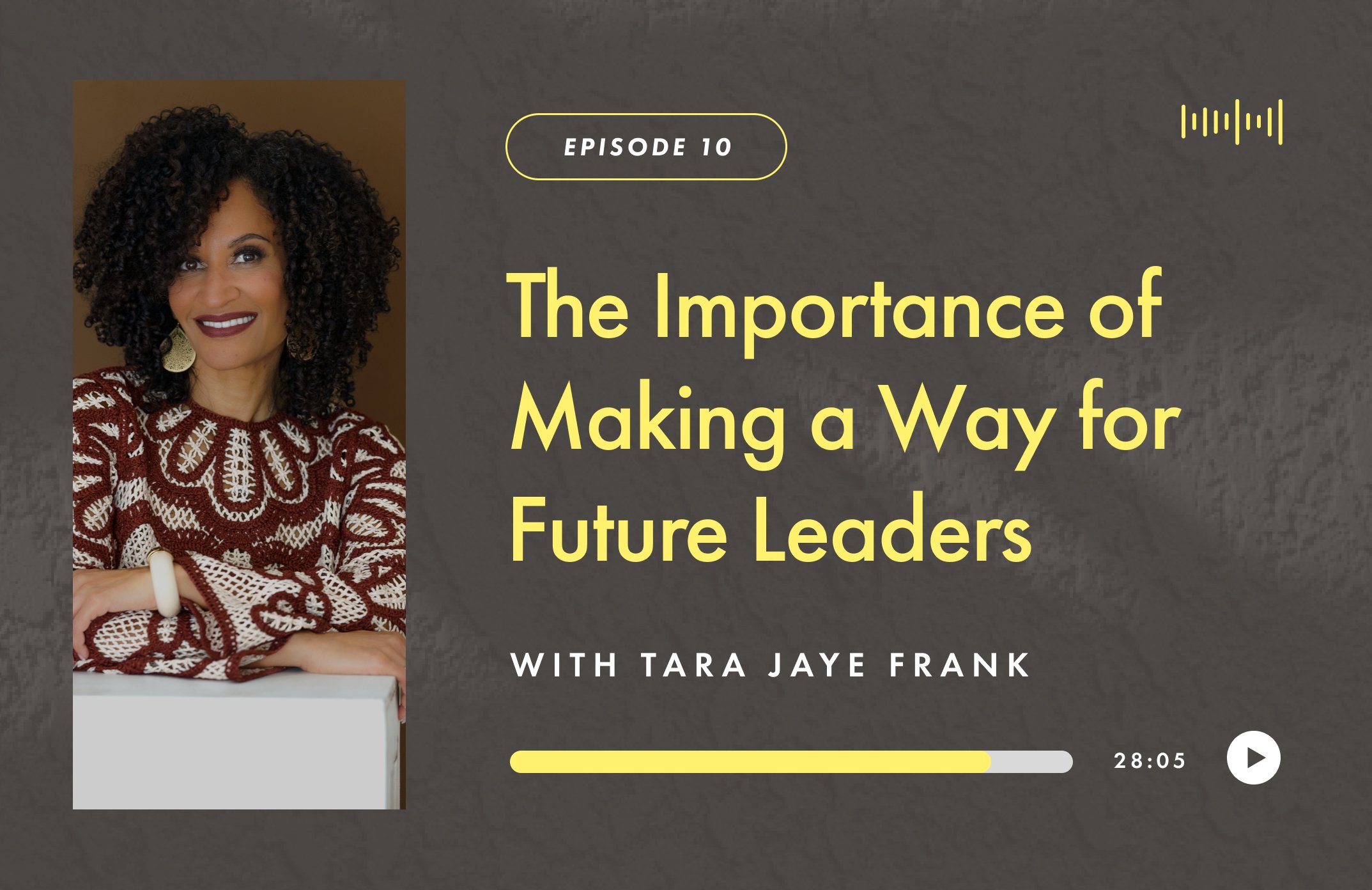
What if the most important thing you do this year isn’t your next project, but the person you choose to invest in?
In this episode of the Collective Impact Podcast, Scott sits down with leadership and workplace culture strategist Tara Jaye Frank to explore what it really means to be a waymaker. Someone who intentionally clears obstacles and opens doors so others can step into their God-given potential.
Drawing from decades of executive experience and her work with The Waymaker Change Group, Tara shares a simple, human picture of what every person longs for: to be seen, respected, valued, and protected. Together, Scott and Tara connect these ideas to nonprofit work, global ministry, and everyday life—especially for those serving in marginalized communities.
If you’ve ever wondered how your influence, experience, and relationships could help raise up local “change makers” around the world (or in your own church), this conversation will give you language, vision, and next steps to start making a way for others.
In this Episode:
What it really means to be a waymaker—and how that goes beyond traditional mentoring
The four core needs every person has: to be seen, respected, valued, and protected
How leaders in nonprofits and ministry can accidentally miss the needs of their own teams
How lessons from corporate leadership translate directly into community and church contexts
The unique passion of younger leaders—and the tension between ideals and real-world complexity
A gentle challenge for leaders: wake up each day asking, “Who can I make a way for today?”
-
Hey everybody. Welcome to the Collective Impact Podcast. This is a place where we explore how our impact. Can multiply when we connect with other individuals. When we meet other people and our passions collide, so much cool stuff can happen for Jesus around the world.
I am so excited. I I've got a new friend, her name is Tara Jaye Frank, she's with us today to talk with us about what it means to be a way maker. And, uh, Tara, I am so glad to have you here today. Thank you for joining me.
so Tara, lots of times, get somebody's resume and we can read it and do the big intro. But I would love for you to tell our listeners who you are, what are the things about you that you would want us to know before we start talking?
First of all, I wanna thank you, for inviting me to spend this time with you, and to share this space with you. I gr I greatly appreciate it. Um, I am, I am Tara j Frank, and I consider myself a bridge builder.
Done a lot of cool things professionally in my life. But when I sit back and reflect on all of it, it's all really been about building bridges between people, ideas, and opportunities.
And so that's how I see myself as part of that. I'm insatiably curious. I try to be compassionate, in everything that I do. I ask a lot of questions and essentially try to solve problems that are meaningful and that will have a lasting impact on people's lives and the way that they show up.
I am such a fan, and where that began was when I read your book, the Waymaker it just hit me and I think it, it impacted a lot of people. Uh, what inspired you first to write that book?
So I'm a leadership. Workplace Culture strategist. That's what I do. I have a firm called The Way Makers Change Group. I worked in corporate America for 21 years. I actually became a leader at 25, and I became an executive at 29. I say that to say I've been leading for half my life, at this point. And so I always really relished leadership, passionate about unleashing potential, right? About helping people be their best, do their best, make their very best contribution. And so when I resigned from Hallmark to pour myself into. Building my own firm, I really wanted to create solutions that would help all people thrive, right?
That would help create environments where people can, again, bring their unique perspectives to the table and share their wildest ideas and I did a lot of reflecting right on the leaders that I had witnessed, the leader I had been, and other leadership stories that I'd heard and realized that everyone like me, everyone who might exist on the margins or be relegated to the margins who had made their way, to the top of their own professional mountaintop had gotten there.
Not just because they were smart and experienced, but because someone made a way for them. There was somebody, who saw the light in them, who decided to pull them alongside, who introduced them to the right people, who opened the doors, who removed the barriers, who basically ushered them through to greater levels of contribution.
And I knew that equity in the workplace, making sure that everyone had an opportunity to contribute fully, freely, and fairly was going to be less about more training. More about more way making. And so that was the spirit of the book. And what I was really trying to do, not only inspire more way makers, but inform them and equip them, right?
And so that's what pull through in the book.
How would you describe the Waymaker idea compared to the more normal, uh, word that we often use of mentoring? What's the difference between being a waymaker and being a mentor?
Is there a difference?
Yeah, the, there is a difference, I think, but, I will also say that mentors can be the way makers. When I first wrote The Way Makers, to be honest, I wrote it for people with power and position, right? So folks who can remove barriers, who can open doors, who can usher people through to higher levels of contribution.
What I've learned over time, though, is that we all have some power. We all have some influence that we can harness and use for the good of other people. I see a mentor, certainly as an encourager. I see a mentor as an informer. I see a mentor as somebody who helps someone integrate into a system, who gives them, that kind of.
Go get 'em, energy, someone who answers questions, all of that. And for me, that process is very much about becoming comfortable in an environment, about being incorporated into an environment about feeling like you are not alone. About combating isolation. That's what all of that is about to me, but the Waymaker really helps us fulfill our potential. And so while one is about comfort and connectedness, the other is about growth and advancement and, opportunity. And so they can be the same person. But those qualities are, I think, a little bit distinct.
Yeah, I love that. And I see the distinction, and I think for myself, I think I've played both of those roles without necessarily, distinguishing the difference between the two. But they're both key parts of, of helping others. So I mentioned to you that I'm kind of interested in hearing your thoughts about how what you teach and what you're about relates to those of us who work, in, 'cause you're coming primarily from a corporate America, sort of a, place.
And many of us are coming at this from a nonprofit. We work in marginalized communities. So the people that we work with. Aren't even yet in corporate America. They're not. They're sometimes just on the street. How would that work? What does that look, what does being a waymaker mean in, in situations like that?
I, we peel our work all the way down to four fundamental needs.
We say every person at work, but the truth is every person in the world, because I see the relationship between employee and employer, the way I see any relationship, right? That's the way I often talk about it. But every human being needs to be seen, respected, valued, and protected
Yeah.
So we wanna feel visible and we talk about that as being acknowledged and recognized and credited for the good things that you might do, whatever those good things are. We talk about people being or feeling respected, which is respected not only for who I am, but also for what I know and what I have done and what I can do from a capability standpoint.
We say everybody wants to be valued and that is. In the workplace. Yes, with pay and promotion and all of that, but also just appreciation. And then we talk about people wanting to be protected, right? And that's to be buffered. To be defended, to be supported, right? In a way that allows you to really move through the world a little bit more unfettered.
And so if you think about that from a very human-centric standpoint, nothing that I said is corporate specific. Nothing that I said only applies to people who have really big titles and work in, tall glass buildings. Those are things that are very fundamental and germane to each and every one of us.
And so if we think about the work that way, then it's probably the most broadly universal. Right frame, to think about how we help people essentially, unleash, how we get the most out of each other, by giving the most of ourselves.
Do you think the people in the nonprofit world, leaders, people who work in communities around the world, do you think that we have blind spots that keep us from being intentional and being good at making a way for people?
Honestly, there are two pieces to that. I feel like some of the folks I've worked with in nonprofits are, they're built for this work. Meaning, many people who go to work at a nonprofit and especially those who make a career of it, they're purpose driven. You know they're there because they believe deeply in a cause or in a set of causes, and they are imbued right with this compassion and this care, and this connectedness, and a desire, a true desire to make an impact beyond themselves.
In that way, I would say that people who work in nonprofits are best positioned to make a way for other people. What I will also say, however. Is that sometimes I feel that all of that energy and that focus and that passion and that deliberateness can be so pointed externally that sometimes inside organizations things get missed.
We're also geared up. To fulfill the cause, you know, outside of our walls. And that can be stressful, especially now. That can be, it can make you weary. It can cause a lot of frustration because the headwinds are growing. The headwinds are more forceful now than ever.
So if you think about it, I'm really passionate about something and right now the world is making it even harder.
Correct.
that passion, I'm a human being. I'm going to feel that, right? I'm going to be frustrated by that. And sometimes we take that frustration out on the people closest to us, the people we know can take it, right?
So if I were to say anything that's specific to nonprofit, I would say we have to cultivate that mindfulness. That the way we treat and serve and support people outside of the organization needs to also turn inward because we need each other to be successful, to fulfill those purposes, right?
that's so right. Yes. When you and I first talked, the first thing that attracted me to, to you and to what you talk about was the title of your book. Yeah, that's not a new word to me, but I'd never read a book about it that was dedicated to that concept. And why it was so interesting to me, as I've told you in the past, is in our organization, one collective, we use a term that we call change makers.
And so in our global approach to community transformation, we will have a catalyst who goes in as our lead person whose job is to identify local talent, local leaders. Who are under-resourced undertrained, get behind them work and try to make a way for them. And this weird thing happened as I was reading your book, and I think I told you about this.
I said to myself, if I was a catalyst, who is responsible to, to a raise up? Raise up people who can transform the community. 'cause the people who are in the community, they already speak the language, they know the culture. They're more passionate about it than we are as Americans coming in could ever possibly be.
So they're the best people to transform their community. And, but I asked myself as I was reading your book. Because we call them change makers. Who are the change makers? Who are the people that can potentially, that we can work with, raise up, encourage, support, make a way for, but what hit me was if I was a catalyst who is our lead person, and I wake up every day, I wonder if I would say to myself that the number one thing I wake up thinking about is.
Is, how can I raise up people, change makers, the intentionality of doing that, and I thought to myself, that should be the number one thing I think about. But I started thinking about, my friends and my colleagues around the world, they wake up often thinking about. They're raising their supports, meeting their budgets, and there's so many other things that are there.
And so I used your book at a conference we had a couple of months ago and talked about this idea of being a way maker and with our language of, helping raise up change makers. And it was a really good discussion, because we should wake up with the number one. I think the number one thought of who can I invest in today?
Who can I raise up? Who can I help? Become a change maker? And and so I asked, and it was like, it's on the list, but it's not at the top of the list, and, and so yeah, it was, it's your book. There are a lot of people in our org that have read it. And it's been a real blessing, a real encouragement.
I'm glad to hear that, and I will say that this unique challenge or this challenge that you're speaking to isn't unique to you, right? Like I go into very large complex organizations and talk to them about increasing their leadership capacity and. They're all facing, what are the goals?
What are my objectives? What are my KPIs and, how do I meet them? And so it can feel like I don't have time for this other stuff. But what I tell them is that if part of your job or if your job is to maximize your resources for the good of the organization. Then this work is critical to that particular goal, right?
So the work is about unleashing contribution and I don't think any one of us can say, I can achieve my KPIs with 50% capacity in my contribution if you knew you had a hundred people working for you, but 50 of them were not actively participating or contributing. At any point in time or 100 of them were contributing, but only at 50% you would have a business problem that you would decide was important of a to address, and that is the business problem that a lot of leaders have without fully recognizing it.
It's about contribution. It's about unleashing contribution, which leads us to productivity, which leads us to retention, which leads us right to all of those other things that we say are really important to meet our goals.
There's definitely this idea when you think, if we go back to using the mentoring word, there's definitely always implied in age, like an age or certainly a resource difference between, but I'm watching and you're seeing the next generations are coming along with some passion.
To do some cool stuff. What are your, what are you excited about next Generation leaders and their ability to raise up and, to be way makers?
Yeah, so it, they're generally very, purpose driven as well, and I think really passionate about what they perceive to be right. And fair and just. And human centric. And I believe that passion and that commitment to the right thing, is the kind of energy we need to get back to, or to arrive at in some cases, a better iteration of ourselves.
I think that's critical. Because I feel that we are losing some ground, from a shared humanity perspective, we're losing some ground, from a true kind of leadership, standpoint. So I think their passion for that, their insistence right on things being better on, on people being healthy, on.
Ideas, being brought forth, like all of that for me is really great. What I think about sometimes when I think about younger people, and, I have six young adult children, so I feel like I have a lot of personal experience with this. And it may just be a youth thing, meaning they may grow out of this, or it could be generational, connected to what they've uniquely seen and experienced.
But there's also this purist mindset a little bit, and I think you and I know having lived a little bit longer, that not everything is so black and white. Not everything is binary, right? Good, bad, up, down. It. We have to contend with dilemmas in life, and sometimes we have to be able to hold two seemingly contradictory truths in both hands and learn how to synthesize it sufficiently right to make the best decision.
We can make with the information or the resources that we have. I do feel like younger people struggle with that. I feel if there's not a way to do it exactly right, according to their definition, then they don't, then they don't wanna do it at all. And my hope is that. They learn in time how to navigate those dilemmas of life because there will always be dilemmas in life, right?
And we can't necessarily just stop everything and cross our arms, and close our eyes when the situation isn't what we deem as perfectly appropriate. So I don't know if that makes sense, but that's the one thing that I process sometimes.
It makes a lot of sense. If you could leave nonprofit leaders with one challenge, after reading the Way Makers, what would it be?
Yeah, I don't know that, that it would be different for nonprofit leaders than for any one. But I would say to realize or to recognize that you have power, right? We define power in the way makers, as because you read it as insight, access, and opportunity. So no matter what your title is, something.
That other people need to know to be successful. You may have access to a person or people or information that other people need to be successful, right? And you may be able to suggest someone for an opportunity or to point them in the right direction. And those are things that can also help people be successful.
So I, I would just say that to recognize that in that way you have power. That you have a responsibility and an opportunity to share that power, without feeling like it will somehow diminish you. Because the more good we put out into the world, I truly believe, the better everyone is, right?
We can solve problems that kind of serve the whole. So that would be the thing, that's the thing that I always remind people of, and I think the other, from a very human perspective, especially now. Is to work really hard against the assumptions. We, we are in a very fear-based environment right now and because of that.
Our brain jumps to a lot of conclusions. We're trying to protect ourselves, so I'm gonna jump to this conclusion in that conclusion because the more clear I can be about my environment or the more clear I can feel about my environment, the more hard lined I can feel about my environment, the safer I feel somehow.
And what's happening right now, honestly, is the opposite of that. We are less safe because we are jumping to. Unhelpful conclusions about each other. Yeah, we are less safe. So just get curious and, interrupt your, thought process enough to ask how do I know?
How do I know what I think I know and what does it mean if the truth is something else?
Could you give us a story of, like a great Waymaker story, like either from your life or from something that you were able to see up close that, that would really demonstrate what your book's about?
'cause I really want y'all to read this book. You gotta read this book. Okay.
I have many, personally, of course, and I've seen so many of these examples throughout my career. Um. me, I've had many may way makers along the way. I started, as I said, my career, as an intern, when I was 20. Uh, and then. Just began as a greeting card writer, in my career and did that for a couple of years.
So along the way, very specific things happened and each of them unlocked the next level of opportunity for me. One, relatively early on was there was a creative director, her name is Lois, and she really saw something in me. She saw a spark in me, and. Decided to give me a leadership job in her division.
It was actually succeeding her, so this was a job she'd been in for years, and she was extremely. It was very important to her, this particular role. And it was also a really big role in the company too. So she'd been in that for years. People called her the queen, like it was very embedded, right?
But when she was working on her succession plan, she chose me to succeed her. I was 25 and I had 21 direct reports, and many of them had been at the company longer than I had been alive. But she saw a spark in me, a talent, an insight, a sensitivity that she really believed could help take this particular business to the next level.
And so that was my first waymaker. She opened a door wide that I never would've imagined I could walk through. At that age and stage. But because she believed in me, because she was encouraging, because I knew she was there to answer my questions and offer support, I felt that I could be successful.
So that's one big one. Another is when I was 29, I had worked on key projects, some big projects, some innovation projects, and there was a man, his name is Mike. He also saw a spark in me and felt that I had good business savvy and that I asked really good questions and that I was creative and thoughtful about the work.
And so it was his, I'll say, endorsement because he was such a, an important person in the company. It was his endorsement combined with the leader of creatives. Very active advocacy. That kind of got me into my very first executive role. So
These things just kept happening. But those door openers along the way and those barrier removals were really, important. So yeah, my, my career has been full of way makers and it's been such a blessing. Honestly, they're coming still.
That's great.
I.
My, my life has been full of those kind of people too. And, one of them, it just a funny story for me. When I was hired in my, in, at an organization, I was at the very bottom rung of the ladder and the guy who was the CEO. He just took a liking to me, and he just was always going the extra mile and investing in me and things like that.
And when I went to work there I was, I had come out of the music business and had not been to college yet, and I was thinking like. I don't really need college. I don't think I really need education and I'm just gonna go get this job and I'll work my way up. And he got his hands on me.
He called me and we had this. Talk about the good old days.
And he said to me, he said, you remember when you first came to work for me and you said you hated education? And I said, yes, I remember. He goes, how did that all turn off for you? Because he knows. And I did. I went on and did my, my, undergrad and my grad and all that. And that opened doors for me.
But it was, he was the one pushing me to do that. And even to the place where not only did I get my undergrad degree, not only did I get a graduate degree, but he actually opened the door for me to teach in a university for a while as an adjunct professor.
What did you teach?
Leadership stuff.
Yeah. So anyways, yeah. I'm, I'm so grateful for people who have been that for you and for me, and I'm glad that we get to do that for others. And I'm really glad that we get to talk about this important topic today because I think we must be intentional about this, and that's what your book did for me.
And by the way, folks. I chose the audible, version, which I loved because I got to hear Tara's voice and her voice inflections tell you exactly what really matters. And I love that about, 'cause sometimes you hear somebody read a book and it's but when you hear the author and the author's got passion, I love that because I'm like, oh, she really digs that point right there.
She's, that's really something she's passionate
You know what? I love this. I No, I've never heard that before. People say that they like it because it's like being in a conversation with. But I've never heard anybody make that point about audible, audio
I would go back and listen. I would go back and listen to spots where you'd say something in a different
And I, and
and I'd write it down and I'd say, yeah, 📍 that's really
us to remember this.
She wants to, yep, exactly.
I love it. I love it. Well, Scott, I appreciate you so much and everything that you stand for and everything you and your organization are doing, and I'm grateful there are people like you in the world because we need you, we really
Well, thank you. Thank you. Thanks for being on our podcast today. If people wanted to know more about you, what's your website or
Yeah, my company website is twc hg.com. So
Okay.
twc hg.com. And that stands for the Waymaker Change Group. If they Google the Waymaker Change Group, they'll probably find it. And then my personal website, is just tara j frank.com.
Thank you my friend. 📍 This has been rich to have you here and it's a great honor. So thanks for being my friend. Thanks for investing in our people today. I appreciate you.
Thank you. I appreciate you too.
-
-
Tara Jaye Frank is a workplace-culture and inclusive-leadership expert, author, and speaker. She is the founder and CEO of The Waymaker Change Group.


